Incoterms 2020 guide
Incoterms 2020 – Your guide to International Trade Standards
Buying and selling goods in international trade is often complicated by the need to define each party’s obligations, costs, and risks. To facilitate import and export trade, the International Chamber of Commerce (ICC) introduced the International Commercial Terms (Incoterms®) — a globally recognized set of trade rules for the sale of goods.
| Transport Modes | |
| Any Mode of Transport | Sea & Inland Waterway Only |
| EXW | FAS |
| FCA | FOB |
| CPT | CFR |
| CIP | CIF |
| DAP | |
| DPU | |
| DDP | |
Group E
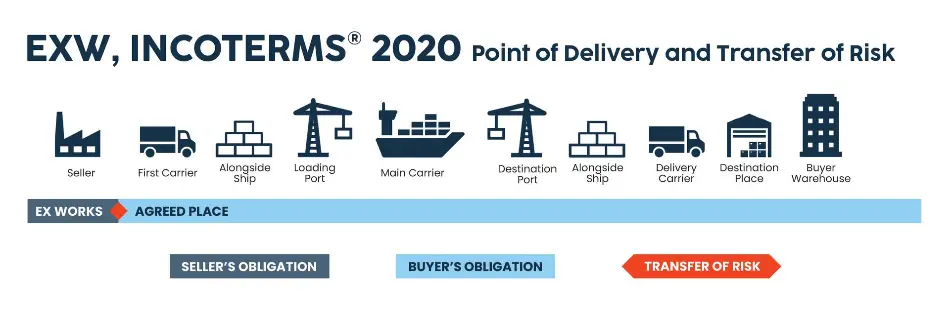
EXW – Ex works (any mode of transport)
The seller fulfills their obligation by making the goods available at their own premises or another agreed location. The seller is not required to load the goods or handle export formalities. The buyer bears all costs and risks from the point of collection. Note: if the seller is in a better position to load the goods, FCA is generally the more appropriate term.
Group F
FCA – Free carrier (any mode of transport)
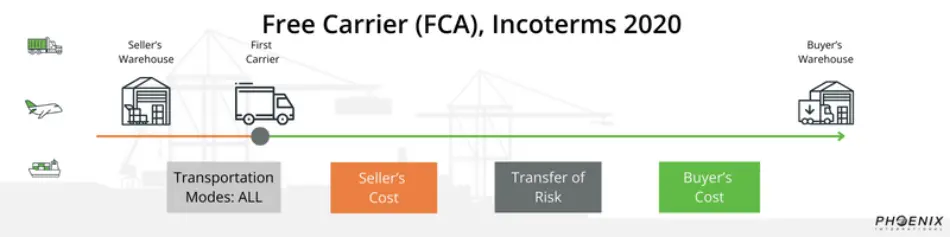
The seller delivers the goods to a carrier or another party nominated by the buyer, at the seller’s premises or another agreed point. Risk transfers to the buyer at that point. The seller is responsible for export customs formalities but not for import clearance or duties.
FAS – Free alongside ship (sea & inland waterway)
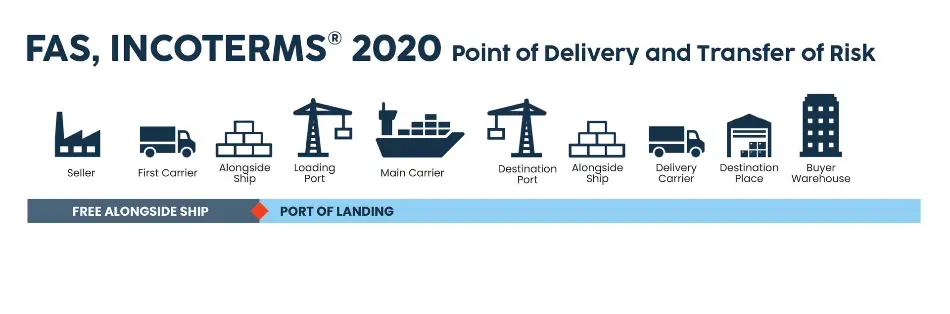
The seller fulfills their obligation when the goods are placed alongside the nominated vessel at the agreed port of shipment. Risk transfers at that point. The seller handles export formalities; the buyer handles import clearance. Note: for containerized cargo, FCA is typically more appropriate.
FOB – Free on board (sea & inland waterway)
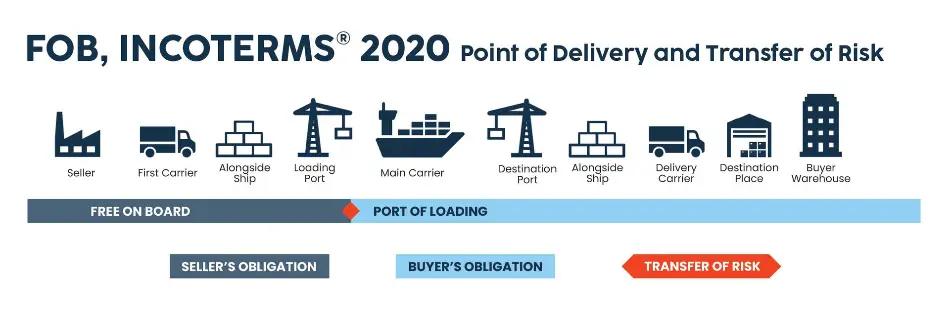
The seller delivers the goods on board the vessel nominated by the buyer at the agreed port of shipment. Risk transfers when the goods are on board. The seller handles export formalities; the buyer handles import clearance. Note: for containerized cargo, FCA is generally more suitable.
Group C
CFR – Cost and Freight (sea & inland waterway)
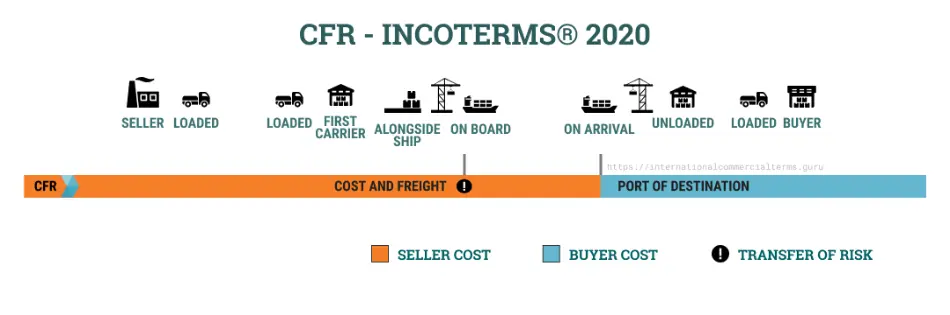
The seller delivers the goods on board the vessel and pays all freight costs to the named port of destination. Risk transfers when the goods are on board at the port of shipment. The seller handles export formalities but not import clearance. Note: for containerized cargo, CPT is more appropriate.
CIF – Cost, Insurance and Freight (sea & inland waterway)
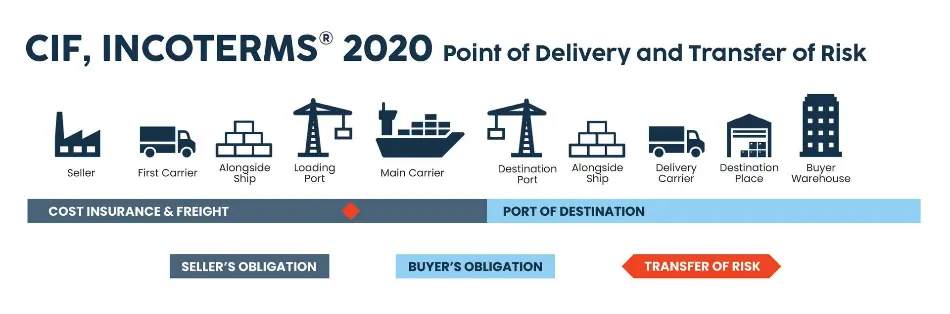
Same as CFR, but the seller also provides cargo insurance covering the buyer’s risk of loss or damage during transit. The seller is required to arrange only minimum insurance coverage; the buyer should negotiate broader coverage if needed. Note: for containerized cargo, CIP is more appropriate.
CPT – Carriage Paid To (any mode of transport)
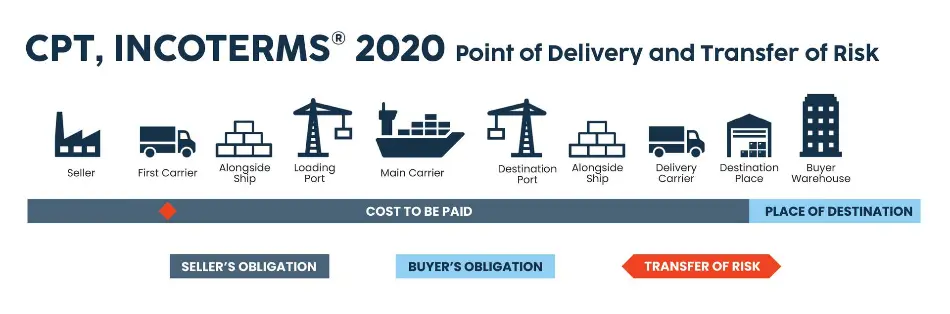
The seller delivers the goods to a carrier at an agreed place and pays freight to the named destination. Risk transfers to the buyer upon handover to the first carrier. The seller handles export formalities but not import clearance.
CIP – Carriage and Insurance Paid To (any mode of transport)
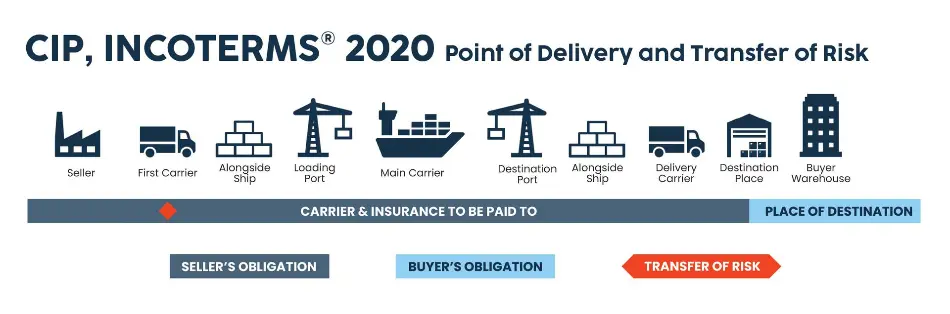
Same as CPT, but the seller also arranges cargo insurance. Under CIP, the seller must provide insurance with broader coverage than under CIF. The seller handles export formalities but not import clearance.
Group D
DAP – Delivered at Place (any mode of transport)
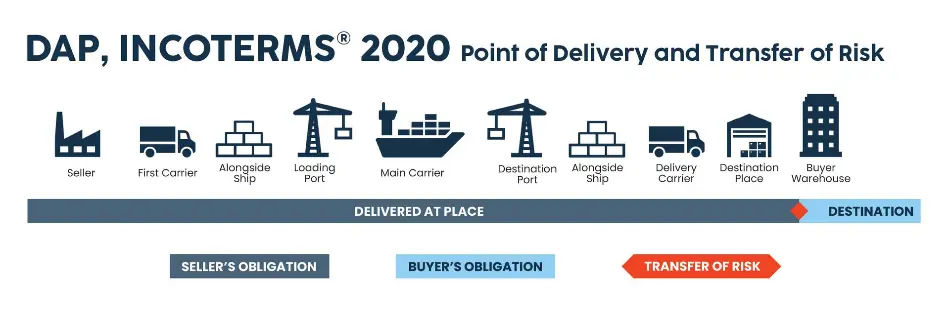
The seller delivers when the goods are placed at the buyer’s disposal on the arriving vehicle, ready for unloading at the named destination. The seller bears all risks and costs up to that point and handles export formalities, but not import clearance or duties. If import clearance is intended to be the seller’s responsibility, DDP should be used instead.
DPU – Delivered at Place Unloaded (any mode of transport)
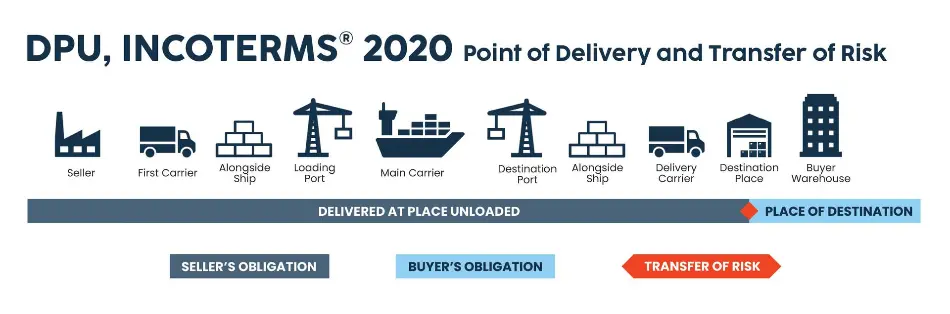
The seller fulfills their obligation when the goods are unloaded from the arriving vehicle and placed at the buyer’s disposal at the named destination. The seller is responsible for export and transit formalities, delivery, and unloading. The buyer handles import clearance. DPU is the only Incoterms rule that requires the seller to unload the goods at destination.
DDP – Delivered Duty Paid (any mode of transport)
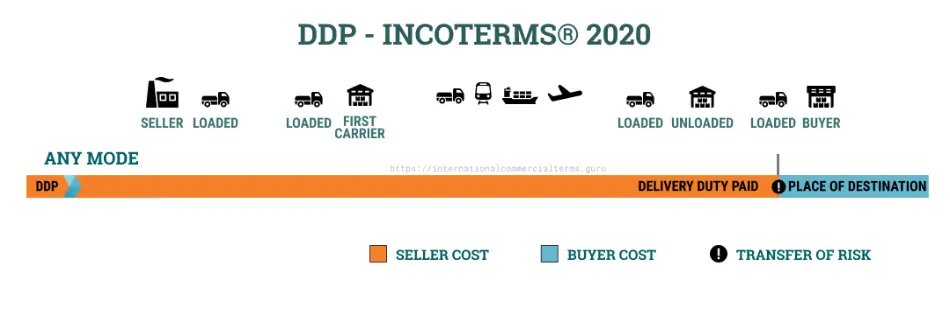
The seller bears maximum obligations – delivering the goods cleared for import, ready for unloading at the named destination, with all duties and taxes paid. The seller handles both export and import customs formalities. Note: DDP should only be used if the seller can directly or indirectly arrange import clearance. If the buyer is to bear import costs and risks, DAP is the more appropriate term.

 Over 500 successfully delivered end-to-end projects